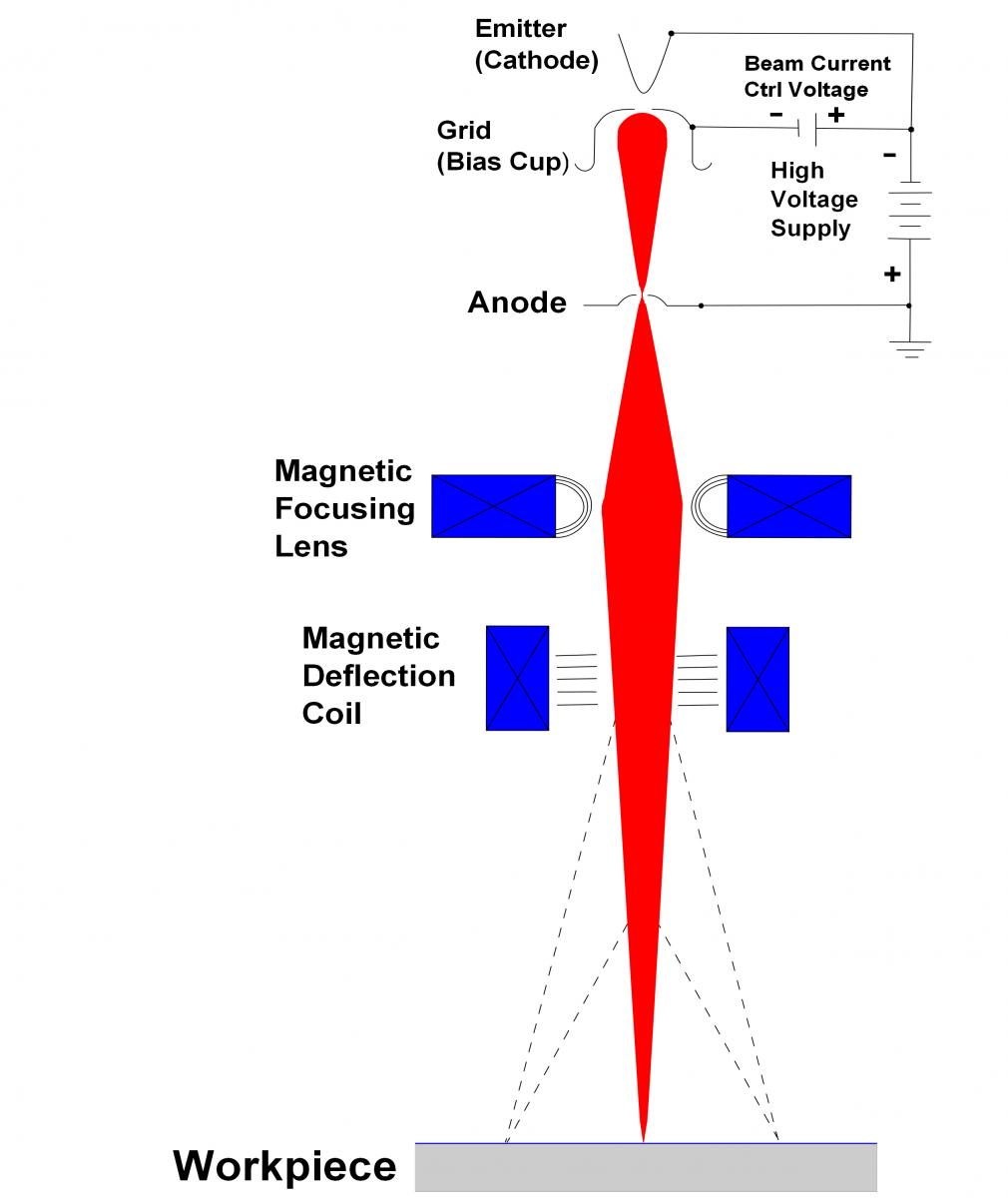
 Electron Beam technologies touch our lives in ways that few people realize. Electron Beam lithography is used to manufacture the semiconductor devices we use every day. Electron microscopes produce the high magnification images that have advanced science. Electron Beams are even being used to cure the ink printed on packaging materials and sterilize medical devices. Electron beams produced the pictures on tube type televisions.
High power electron beam systems for welding and drilling are used in the aerospace, automotive, defense, food processing, medical, nuclear, petrochemical, power generation, and a variety of other industries. Today's aircraft have components that were manufactured using EB Welding. Around the world, automobiles on the road have components that were manufactured using EB Welding. The fiberglass that insulates homes was produced on machines with precision electron beam drilled holes. PTR and its affiliate companies in the Global Beam Technologies Group manufacture these electron beam welding and drilling systems.
For more detailed information on the Electron Beam Welding (EBW) process & technology please follow one of the links below to access PTR's EB welding videos, a glossary of commonly used industry terminology, advantages the EB process offers, frequently asked questions and a growing collection of technical papers.